Introduction: Straightening your teeth is no longer just for teenagers. Modern orthodontics offers multiple options for achieving a perfect smile. This guide compares Invisalign clear aligners with traditional braces to help you make an informed decision.
Content Outline:
Understanding Your Orthodontic Options
- Brief history of orthodontics
- Why straight teeth matter (health and aesthetics)
- Adult orthodontics on the rise
Traditional Metal Braces: The Classic Choice
- How they work (brackets, wires, rubber bands)
- Treatment process and adjustments
- Average treatment time (18-36 months)
- Effectiveness for complex cases
- Pros: Most effective for severe misalignment, lower cost, no compliance issues
- Cons: Visible appearance, food restrictions, oral hygiene challenges, discomfort
Ceramic Braces: The Aesthetic Middle Ground
- Tooth-colored brackets
- Less noticeable than metal
- Cost and effectiveness
- Staining concerns
Lingual Braces: Hidden Behind Teeth
- Placement on back of teeth
- Completely invisible
- Higher cost and longer adjustment period
- Speech difficulties initially
Invisalign Clear Aligners: The Modern Solution
- How Invisalign works (series of custom clear trays)
- 3D treatment planning
- Average treatment time (12-18 months)
- Switching aligners every 1-2 weeks
- Pros: Nearly invisible, removable, no food restrictions, easier oral hygiene, comfortable
- Cons: Requires discipline (22 hours/day wear), not suitable for severe cases, higher cost
Direct Comparison: Invisalign vs. Traditional Braces
Appearance:
- Invisalign: Clear, virtually invisible
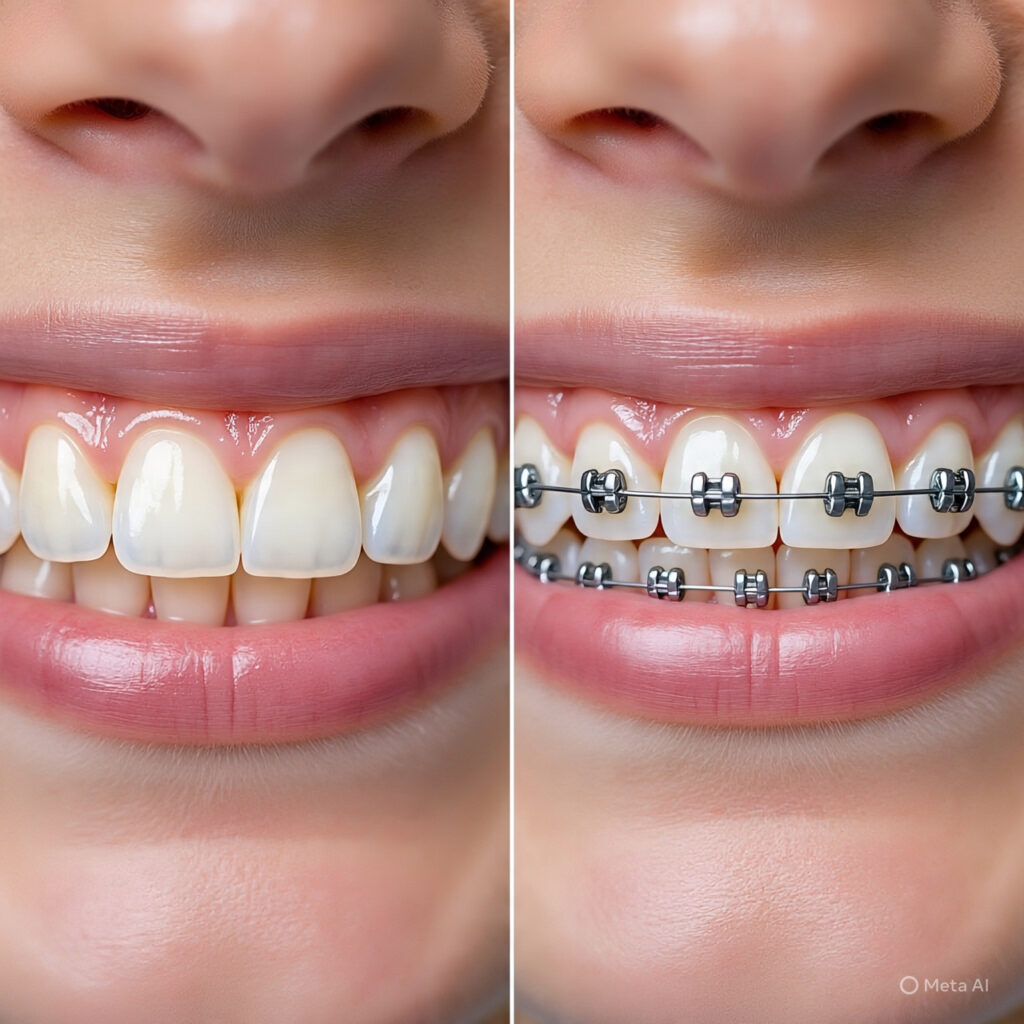
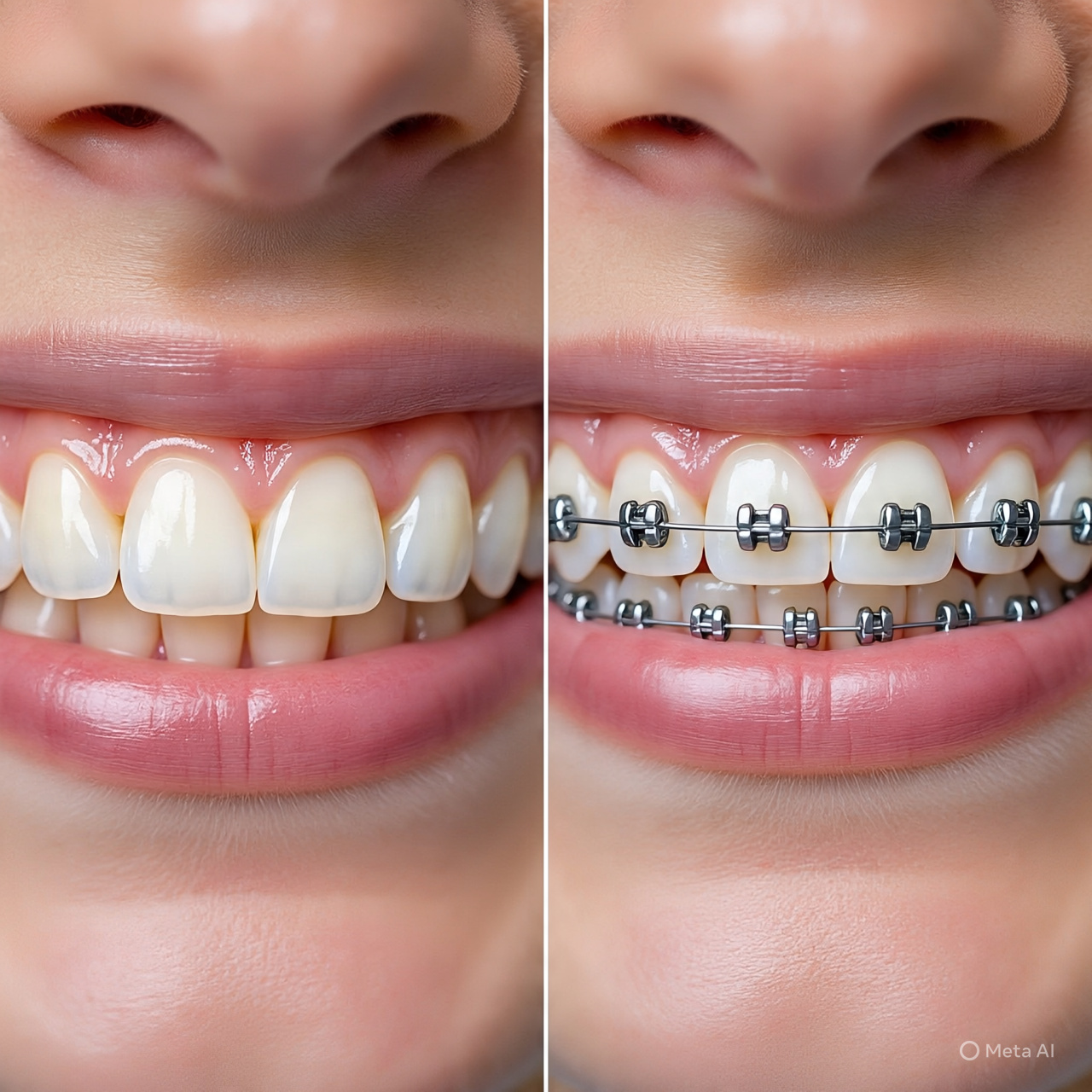
- Braces: Visible metal or ceramic
Comfort:
- Invisalign: Smooth plastic, no mouth sores
- Braces: Metal can irritate cheeks, tongue
Treatment Time:
- Invisalign: 12-18 months (average)
- Braces: 18-36 months (average)
Effectiveness:
- Invisalign: Best for mild to moderate cases
- Braces: Effective for all cases, including severe
Lifestyle Impact:
- Invisalign: Removable for eating, no restrictions
- Braces: Fixed, food restrictions apply
Oral Hygiene:
- Invisalign: Easy (remove to brush and floss)
- Braces: Challenging (special tools needed)
Cost:
- Invisalign: Generally higher
- Braces: More affordable option
Office Visits:
- Invisalign: Every 6-8 weeks
- Braces: Every 4-6 weeks for adjustments
Who Is the Right Candidate?
Choose Invisalign If:
- You have mild to moderate misalignment
- Aesthetics are a priority
- You’re disciplined about wearing aligners
- You want dietary freedom
- You’re an adult or older teen
Choose Traditional Braces If:
- You have severe misalignment or bite issues
- Cost is a primary concern
- You prefer not to worry about compliance
- You’re a younger patient
- Complex tooth movements needed
The Treatment Journey
Initial Consultation:
- Comprehensive examination
- 3D imaging and impressions
- Treatment plan presentation
- Cost discussion
During Treatment:
- Regular checkups and monitoring
- Progress tracking
- Adjustments as needed
After Treatment:
- Retainers (crucial for both options)
- Retention phase
- Long-term results maintenance
Real Patient Stories
- Case studies from Dentara Aesthetic Clinic
- Before and after transformations
- Patient testimonials
Making Your Decision
- Factors to consider
- Questions to ask your orthodontist
- Personal priorities assessment
Why Choose Dentara Aesthetic Clinic?
- Dr. Munazza’s orthodontic expertise
- Both options available
- Personalized treatment plans
- Flexible payment options
- Advanced technology
Conclusion: Both Invisalign and traditional braces can deliver beautiful results. The right choice depends on your specific case, lifestyle, and priorities. Dr. Munazza will help you determine the best path to your perfect smile.
Call-to-Action: Ready to straighten your smile? Book your free orthodontic consultation at dentarastudio.com