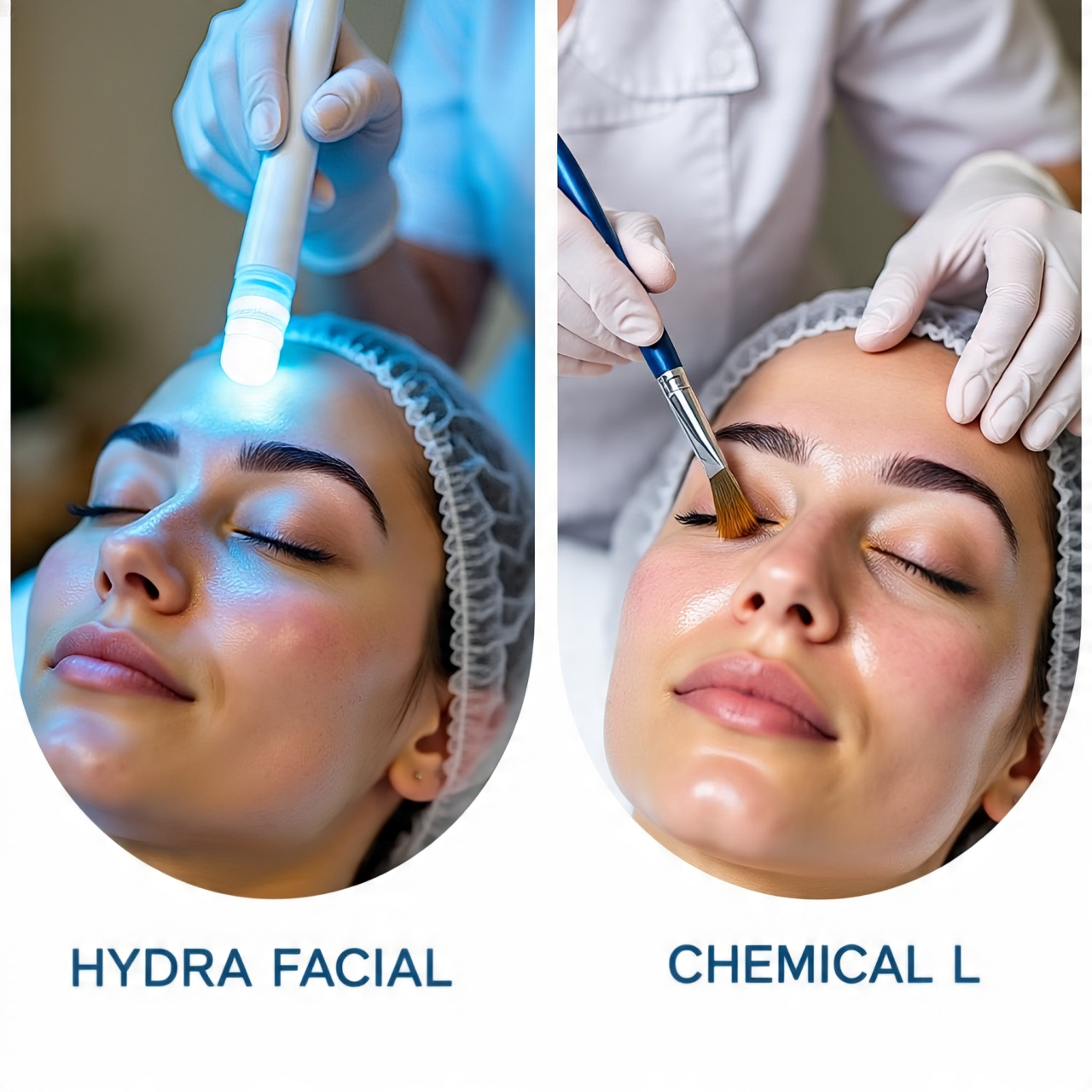
Introduction: Facials have evolved far beyond basic spa treatments. Today’s advanced procedures like Hydra Facials and Chemical Peels offer dramatic results for various skin concerns. But which one is right for you? This comprehensive guide breaks down both treatments.
Content Outline:
Understanding Your Skin’s Needs
- Common skin concerns (acne, aging, pigmentation, dullness)
- Skin types (oily, dry, combination, sensitive)
- Importance of professional assessment
- Setting realistic expectations
Hydra Facial: The Gentle Powerhouse
What Is Hydra Facial?
- Multi-step treatment combining cleansing, exfoliation, extraction, hydration
- Patented vortex-fusion technology
- No downtime required
- Suitable for all skin types
- “Red carpet facial” – instant glow
The Hydra Facial Process:
- Cleansing & Exfoliation – Removes dead skin cells and surface impurities
- Gentle Acid Peel – Loosens debris from pores without irritation
- Extraction – Painless suction removes blackheads and impurities
- Hydration – Infuses skin with serums (hyaluronic acid, peptides, antioxidants)
- Protection – Antioxidants and peptides maximize glow
Treatment Duration: 30-45 minutes
Hydra Facial Benefits:
- Immediate, visible results
- Deeply cleanses and unclogs pores
- Reduces fine lines and wrinkles
- Improves skin texture and tone
- Hydrates intensely
- Reduces hyperpigmentation
- Minimizes enlarged pores
- Safe for sensitive skin
- No downtime or peeling
- Relaxing and painless
Best For:
- All skin types, especially sensitive
- Quick results for special events
- Regular maintenance
- First-time facial seekers
- Those who can’t afford downtime
Recommended Frequency:
- Monthly for optimal results
- Maintenance: Every 6-8 weeks
Chemical Peels: The Deep Transformer
What Are Chemical Peels?
- Application of chemical solution to remove damaged outer layers
- Controlled skin injury stimulates regeneration
- Various depths (superficial, medium, deep)
- More intensive than Hydra Facial
Types of Chemical Peels:
Superficial Peels (Light):
- Alpha-hydroxy acids (AHA) or beta-hydroxy acids (BHA)
- Treats mild discoloration, rough texture, acne
- Minimal downtime (1-3 days)
- Series of treatments needed
Medium Peels:
- Trichloroacetic acid (TCA)
- Treats age spots, fine lines, moderate sun damage
- Downtime: 5-7 days
- More dramatic results
Deep Peels:
- Phenol or high-concentration TCA
- Treats deep wrinkles, scars, precancerous growths
- Significant downtime (2-3 weeks)
- One-time treatment with dramatic results
Chemical Peel Benefits:
- Significant improvement in skin texture
- Reduces wrinkles and fine lines
- Fades age spots and hyperpigmentation
- Treats acne and acne scars
- Stimulates collagen production
- Evens skin tone
- Long-lasting results
- Can treat sun damage
The Chemical Peel Process:
- Skin cleansing and preparation
- Application of chemical solution
- Tingling or burning sensation (temporary)
- Neutralization (for some peels)
- Post-treatment soothing
- Peeling phase begins (2-7 days depending on depth)
Best For:
- Specific skin concerns (pigmentation, sun damage)
- Those who can manage downtime
- Moderate to severe skin issues
- Long-term results seekers
Downtime:
- Light peels: 1-3 days
- Medium peels: 5-7 days
- Deep peels: 2-3 weeks
Recommended Frequency:
- Light peels: Every 4-6 weeks
- Medium peels: Every 6-12 months
- Deep peels: One-time or very rarely repeated
Head-to-Head Comparison
| Feature | Hydra Facial | Chemical Peel |
|---|---|---|
| Treatment Time | 30-45 minutes | 30-60 minutes |
| Downtime | None | 1-21 days (depending on depth) |
| Pain Level | Painless | Mild to moderate discomfort |
| Results | Immediate glow | Visible after peeling (3-14 days) |
| Best For | All skin types | Specific concerns |
| Depth | Surface level | Variable (light to deep) |
| Frequency | Monthly | 4-6 weeks to yearly |
| Cost | Moderate | Varies by depth |
| Skin Sensitivity | Safe for sensitive skin | Not ideal for very sensitive skin |
Which Treatment Should You Choose?
Choose Hydra Facial If:
- You have sensitive or reactive skin
- You need immediate results (event, photoshoot)
- You can’t afford downtime
- You want regular maintenance treatments
- You’re new to professional facials
- You have rosacea or very dry skin
Choose Chemical Peel If:
- You have specific concerns (sun damage, deep pigmentation)
- You can manage downtime
- You want more dramatic, long-lasting results
- You have stubborn acne or acne scars
- You’re seeking anti-aging benefits
- Your skin is resilient (not overly sensitive)
Can You Combine Both Treatments?
- Yes, alternating treatments can be beneficial
- Example schedule: Hydra Facial monthly, Chemical Peel quarterly
- Enhanced results with complementary benefits
- Dr. Munazza can create a customized combination plan
Preparing for Your Treatment
Before Hydra Facial:
- No special preparation needed
- Arrive with clean face (no makeup)
- Avoid sun exposure
Before Chemical Peel:
- Avoid retinoids 3-7 days prior
- No waxing or facial hair removal 1 week before
- Discontinue certain medications (consult doctor)
- Pre-treatment skincare (sometimes prescribed)
Aftercare and Maintenance
Post-Hydra Facial:
- Apply sunscreen (SPF 30+)
- Avoid heavy makeup for 24 hours
- Stay hydrated
- Follow normal skincare routine
Post-Chemical Peel:
- Gentle cleansing (no scrubbing)
- Moisturize frequently
- Strict sun protection (SPF 50+)
- No picking or peeling skin
- Avoid makeup until peeling complete
- Use prescribed post-peel products
Cost Considerations
- Hydra Facial: $$$ per session
- Chemical Peels: $ – $$$$ (depending on depth)
- Package deals and memberships
- Long-term investment in skin health
Real Results: Before and After
- Patient transformations from Dentara Aesthetic Clinic
- Different skin types and concerns
- Timeline of results
- Testimonials and experiences
Safety and Side Effects
Hydra Facial:
- Minimal risks
- Possible slight redness (temporary)
- Very rare allergic reactions
Chemical Peels:
- Redness and peeling (expected)
- Temporary darkening (hyperpigmentation risk)
- Infection risk (if not properly cared for)
- Scarring (rare, with deep peels)
- Not suitable during pregnancy
Frequently Asked Questions
- How often can I get these treatments?
- Can I do both in the same month?
- Will my skin purge after treatment?
- When will I see results?
- Are these treatments safe for dark skin?
- Can I wear makeup after treatment?
Expert Recommendations from Dr. Munazza
- Personalized treatment plans
- Skin assessment importance
- Seasonal considerations (avoid deep peels in summer)
- Maintenance schedules
- Combination therapy benefits
Conclusion: Both Hydra Facials and Chemical Peels offer remarkable benefits for skin health and appearance. The right choice depends on your skin type, concerns, lifestyle, and goals. Dr. Munazza Yasmeen will assess your skin and recommend the best treatment plan for you.
Call-to-Action: Unsure which treatment is right for you? Book a free skin consultation with Dr. Munazza at dentarastudio.com and discover your path to radiant skin!